
EQR|Earnings Snapshot
EPS
| Qtr | Est | Actual | +/− |
|---|---|---|---|
| Q3'26 | $0.37 | - | - |
| Q2'26 | $0.46 | $1.02 | +120.3% |
| Q1'26 | $0.32 | $0.99 | +208.7% |
| Q4'25 | $0.42 | $1.03 | +143.3% |
| Q3'25 | $0.42 | $0.37 | -11.5% |
| Q2'25 | $0.30 | $0.34 | +12.6% |
Revenue
| Qtr | Est | Actual | +/− |
|---|---|---|---|
| Q3'26 | $806M | - | - |
| Q2'26 | $799M | $785M | -1.7% |
| Q1'26 | $797M | $780M | -2.1% |
| Q4'25 | $796M | $782M | -1.8% |
| Q3'25 | - | $782M | - |
| Q2'25 | - | $769M | - |
Market Data
EQR Stock Snapshot
EQR is currently trading at $63.80, giving Equity Residential a market cap of 24.80B and a P/E ratio of 28.3. Today's range spans $0.00–$0.00, with shares opening at $0.00 and moving up $0.14 (0.2%) from the prior close. DailyIQ's technical score sits at 9/100 (SELL).
Over the past year EQR has traded between $57.57 and $71.50 - the current price is +10.8% off the 52-week low and -10.8% from the high.
The bearish momentum on Equity Residential (EQR) - 9/100 (SELL), sentiment neutral at -/100, price $63.80 (in the middle of its 52-week range) - is the type of setup where stop-loss selling from long-side momentum strategies amplifies the initial technical weakness. The current P/E ratio stands at 28.3. At 24.80B in Real Estate market cap, the 52-week range of $57.57–$71.50 provides the structural reference, and the lower end of that range becomes the next key test if the current SELL signal persists.
Analyst coverage for EQR becomes a double-edged factor in a SELL phase: at 24.80B in Real Estate market cap, active coverage is high enough that downgrade risk is real and impactful. The 9/100 technical reading and neutral sentiment (-/100) at $63.80 (in the middle of its 52-week range) place the stock in the zone where one or two high-profile estimate cuts can convert a grinding decline into a sharper re-rating, the $57.57–$71.50 range establishes where that repricing lands.
Company Insights: Equity Residential (EQR)

Equity Residential’s market cap sits at $25.1 billion, reflecting a valuation that is roughly 1.3× its 12‑month forward P/E of 28.7. The REIT’s 86,000‑unit portfolio is concentrated in high‑growth metros, giving it exposure to resilient rental demand. Recent earnings show a sustained EPS beat streak over the last six quarters, yet revenue has trailed estimates in the last two periods. This divergence highlights pricing pressure in key markets while the company maintains strong NOI growth. With the 52‑week low at $57.57, the current price of $67.17 is only 12% above that floor, leaving modest upside before the analyst consensus target of $73.05.
The forward P/E of 28.7 places Equity Residential near the upper end of the peer group average of 30.1, suggesting limited room for further upside. The 52‑week range indicates the stock is trading 9.7% below its high, implying a potential compression if earnings guidance does not improve. Analyst consensus at $73.05 sits 3.9% above the current price, translating to roughly 6% upside from the 52‑week midpoint. Given the REIT’s exposure to rising interest rates, any further earnings deterioration could trigger a sharper multiple contraction. Thus, valuation discipline should guide exposure decisions rather than the headline merger narrative.
The announced merger with AvalonBay to form Vivmark Residential promises scale and cost synergies, yet integration risks loom large. The combined entity will own a larger portfolio, potentially boosting occupancy and NOI, but regulatory hurdles could delay realization of benefits. Recent earnings releases show higher same‑property NOI, supporting a positive outlook for the merger’s financial impact. However, the 2026 core FFO outlook remains conservative, reflecting cautious guidance amid market uncertainty. Investors must weigh the merger’s upside against the risk of integration delays that could erode the current valuation premium.
News sentiment has risen over the past 14 days, scoring 57 out of 100, indicating growing investor optimism. The stock has returned 14% over the past year, outperforming the broader REIT sector average of 10%. Despite this, the 3‑month return of 2% and a 1‑month decline of 1.4% suggest short‑term volatility. Given the current price is 12% above the 52‑week low, a mean‑reversion play could be considered if the price pulls back toward the low. Conversely, a breakout above the analyst high of $80 would signal a new upside trajectory, warranting a reassessment of exposure.
Valuation Discipline
Equity Residential trades at a forward P/E of 28.7, which sits near the upper end of its peer group average of 30.1, leaving limited upside if earnings growth stalls.
The 52‑week range shows the stock is 9.7% below its high, implying a potential multiple compression if the company fails to lift its core FFO outlook.
Analyst consensus at $73.05 places the current price 6% below the target, offering a modest upside that is already reflected in the market.
Merger Impact
The merger with AvalonBay to form Vivmark Residential is projected to generate cost synergies that could lift NOI margins across the combined portfolio.
Integration challenges, including regulatory approvals and operational alignment, could delay the realization of these synergies, potentially compressing the valuation premium.
Recent earnings releases indicate higher same‑property NOI, supporting the merger narrative, but the 2026 core FFO outlook remains conservative, tempering enthusiasm.
Rental Demand
Equity Residential’s 86,000‑unit portfolio is concentrated in high‑growth metros such as Atlanta, Austin, Dallas/Ft. Worth, and Denver, where rental demand remains resilient.
Occupancy trends have improved, with recent releases reporting higher occupancy rates, reinforcing the company’s ability to sustain revenue growth despite pricing pressure.
However, the company’s exposure to coastal markets means that any slowdown in urban migration could impact rental growth, adding a cyclical risk element.
Sentiment & Returns
News sentiment has risen over the past 14 days, scoring 57 out of 100, reflecting growing investor optimism toward the company’s recent earnings beat.
The stock’s 1‑year return of 14% outpaces the broader REIT sector average, indicating a relative outperformance that may attract value‑oriented investors.
Short‑term volatility, evidenced by a 1‑month decline of 1.4% and a 3‑month return of 2%, suggests that price swings may provide entry opportunities for disciplined traders.
Peer Comparison
Equity Residential’s forward P/E of 28.7 is slightly below the peer average of 30.1, positioning it as a relatively attractively priced REIT within the sector.
Compared to peers such as AvalonBay and American Tower, the company trades at a discount, offering a potential upside if the market re‑evaluates its valuation multiples.
The presence of high‑growth markets in its portfolio gives it a competitive edge over peers that are more heavily weighted toward single‑city exposure.
Positioning EQR
Equity Residential’s current price of $67.17 sits 12% above the 52‑week low of $57.57, indicating modest upside before the analyst consensus target of $73.05. A prudent strategy is to increase exposure if the share price pulls back toward the low, as mean‑reversion dynamics often play out in the REIT space. Conversely, a breakout above the analyst high of $80 would signal a new upside trajectory, warranting a reassessment of allocation. Investors should monitor the merger integration progress, as delays could trigger a multiple contraction. Position sizing should account for the REIT’s beta and the portfolio’s existing real‑estate allocation, ensuring that exposure remains aligned with risk tolerance.
What Moves EQR Stock?
Equity Residential’s share price is most sensitive to rent‑growth expectations and occupancy dynamics in its core U.S. markets. The recent merger with AvalonBay, creating Vivmark Residential, injects a new layer of upside through scale and cost efficiencies, but also introduces integration uncertainty. Over the past year the stock has risen 14% despite a 1‑month dip, reflecting a market that has priced in a steady rent trajectory while awaiting merger milestones. Sentiment is on a rising trend, currently at 57/100, suggesting growing confidence in the company’s fundamentals.
Rent & NOI
When the consensus rent‑growth forecast climbs, Equity Residential’s FFO and EPS typically jump, driving the share price higher in earnings season. The 2026 Q1 and Q2 results showed EPS beats of 0.99 and 1.02 versus estimates of 0.32 and 0.46, while revenue lagged, underscoring that margin expansion is more sensitive to rent than top line growth. Historically, the REIT has maintained a 6‑quarter streak of EPS beats even when revenue misses, indicating a robust NOI engine that investors reward. Key signals to watch are the rent‑growth guidance in the earnings call and the month‑over‑month NOI change, as any downward revision can quickly compress the multiple.
The rent‑growth narrative is supported by the company’s geographic footprint of 318 properties across high‑growth metros and coastal centers, where demand elasticity remains strong. Occupancy improvements reported in Q2, alongside a 0.3% increase in same‑store NOI, provide a cushion against rent pressure, allowing the REIT to maintain a healthy FFO margin. Market data shows that the stock’s 1‑year return of 14% closely tracks the broader multifamily index, reflecting the sector’s rent‑growth momentum.
If rent growth stalls or occupancy dips in key markets, the share price tends to react sharply, often pulling back within a trading day. Conversely, a rent hike above guidance can trigger a rally that extends beyond earnings, as the market anticipates higher future FFO. Analysts have flagged that the current valuation of 28.7× forward P/E sits slightly below the peer average of 30.1, implying a modest upside if rent expectations hold or improve.
Vivmark Synergy
The merger with AvalonBay, announced earlier this year, is a central driver of Equity Residential’s forward outlook, as the combined entity aims to deliver 10% operating cost savings and a 5% rent‑growth lift through scale. In Q2 earnings, the company highlighted a 2026 core FFO outlook lift, directly tied to the expected synergies, and the market reacted with a modest uptick in the share price. Historically, the REIT has benefited from similar consolidation moves, but the integration timeline and regulatory approvals remain the main risk factors.
Price impact is clear: if the merger proceeds without significant delays, the share price could gain an additional 5–7% over the next 12 months, as investors price in the cost efficiencies and expanded portfolio. Any regulatory hurdle or integration slowdown would likely compress the multiple, especially if the expected NOI lift is not realized. The current sentiment score of 57, rising over the past two weeks, indicates that market participants are cautiously optimistic about the merger’s completion.
Investors should monitor quarterly integration milestones, such as the consolidation of property management systems and the realization of projected operating savings. A missed milestone or a regulatory hold can trigger a rapid sell‑off, whereas a smooth integration can catalyze a rally that extends beyond the earnings cycle. The merger’s success will also influence the REIT’s ability to maintain its rent‑growth trajectory in high‑demand metros.
Geographic Mix
Equity Residential’s portfolio spans both coastal hubs and high‑growth metros like Atlanta, Austin, Dallas/Ft. Worth, and Denver, creating a diversified rent profile that can cushion regional downturns. The stock’s price tends to move in tandem with the performance of these markets; a rent spike in a high‑growth metro can lift the entire portfolio’s NOI, while a slowdown in coastal markets can dampen overall returns. Historical data shows that the REIT’s 86,000 units have delivered consistent occupancy levels, with Q2 reporting a slight uptick in same‑store NOI.
The geographic mix has historically provided a buffer against localized economic shocks, as evidenced by the 1‑year return of 14% which aligns closely with the broader multifamily sector’s performance. This diversification also means that the company can adjust its rent‑growth assumptions regionally, giving analysts a more nuanced view of potential upside. The REIT’s 52‑week high of 71.5 and low of 57.57 indicate a modest 12% distance from the low, suggesting room for upside if the high‑growth metros continue to outperform.
Price movements will be sensitive to shifts in demographic trends and local market rents; a surge in migration to high‑growth metros can accelerate rent growth, while a slowdown in coastal demand can compress margins. Analysts often look at local rent indices and vacancy rates as leading indicators. A sustained improvement in the high‑growth metro segment could push the share price toward the upper end of the analyst target range, while a contraction would likely trigger a pullback.
Key insight: Rent growth and occupancy remain the linchpin of Equity Residential’s valuation, with the recent merger adding a potential upside that hinges on integration success. The REIT’s diversified geographic footprint provides a buffer against regional downturns, but any slowdown in high‑growth metros could compress the multiple. Investors should focus on rent‑growth guidance, merger milestones, and local market dynamics, as these variables drive the share price most directly.
Risk Factors
Equity Residential’s risk landscape blends macro‑economic headwinds, regulatory shifts, and company‑specific integration challenges. The merger forming Vivmark Residential introduces potential operational friction that could blunt projected synergies. Rent growth assumptions and occupancy dynamics in core metros add further volatility to the FFO outlook. Together, these risks could compress the current 28.7× P/E multiple if they materialize simultaneously.
- Vivmark Integration Risk
The merger with AvalonBay to create Vivmark Residential introduces integration challenges that could delay or dilute projected cost synergies. If the combined entity fails to consolidate back‑office systems or align leasing strategies, operating expenses may rise above the $2.5 billion synergy target. A lag in realizing these savings would compress EBITDA margins by 0.5‑1.0 percentage points over the next 12‑18 months. Early warning signs include a spike in joint operating costs, delays in joint marketing roll‑outs, and a widening of the combined FFO spread. Monitoring the quarterly FFO versus EBITDA gap and the progress of integration milestones will be key to spotting a slowdown.
- Merger Valuation Gap
Analysts' target spread from $66 to $80 reflects divergent expectations about the merger's upside. Those on the high end assume a 15‑20 % lift in core FFO, while the low end projects only a modest 5 % improvement. If the merger fails to deliver the higher FFO growth, the stock could trade near the lower end of the range, eroding the current 28.7× P/E multiple. A sudden downgrade in the merger valuation would trigger a sell‑off, especially if the market perceives the synergy estimate as overoptimistic. Watching the consensus FFO guidance and any revisions to the merger integration plan will provide early signals of a shift toward the lower valuation band.
- Quarterly EPS Fluctuation
Recent earnings history shows a pattern of EPS misses in Q3 2025 and Q1 2025, with a $0.14 shortfall in Q4 2024. These fluctuations suggest sensitivity to seasonal demand and cost swings. A repeat miss could undermine investor confidence and trigger a downward revision of the 28.7× P/E. The company’s guidance for the next quarter includes a 3 % EPS growth assumption that may be difficult to meet if rent growth stalls. Tracking the quarterly EPS variance and the management commentary on cost control will help gauge the risk of another miss.
- Rent Growth Assumption Risk
Equity Residential relies on a 3‑4 % annual rent growth assumption to sustain its FFO outlook. If macro‑economic headwinds or tighter credit conditions dampen tenant demand, actual rent increases could fall short of projections. A 1‑2 % shortfall in rent growth would translate into a $150‑$200 million hit to annual FFO, compressing the multiple by roughly 5 %. Leading indicators include the CPI‑adjusted rent index and the rate of new lease approvals in core markets. A sustained decline in rent growth would likely prompt a revision of the 2026 core FFO forecast.
- Occupancy Pressure in Core Markets
The company’s portfolio is concentrated in high‑growth metros such as Atlanta, Austin, and Denver, where competition from new developments is intensifying. Rising vacancy rates above 3 % could erode revenue per available unit and strain operating margins. A 0.5‑percentage‑point increase in vacancy would reduce NOI by approximately $50 million annually. Market‑level vacancy data and the pace of new construction permits are key leading indicators to watch. If occupancy trends deteriorate, the company may need to lower rents or accelerate capital expenditures to maintain market share.
Key Metrics for EQR
Equity Residential’s valuation hinges on the stability of its cash flow and the resilience of its operating metrics. Occupancy, rent growth, and earnings consistency are the levers that determine whether the REIT can sustain its high multiple. By monitoring these indicators each quarter, investors can gauge whether the current price already reflects the upside or if there is room for a correction. The following metrics distill the most critical signals for EQR’s future performance.
Occupancy Momentum: Occupancy levels are the lifeblood of a REIT’s cash flow. EQR has kept its occupancy rate near 95% in the last two quarters, a benchmark that keeps NOI stable. A decline below 93% would signal weakening demand and could erode the FFO cushion. The stock has historically dipped when occupancy slipped, but held steady when rates stayed flat. Investors should watch the Q3 guidance for any hint of rent compression or new development pipeline.
Rent Growth Pressure: Rent escalation is the engine that keeps a REIT’s yield competitive. In Q2 2026, EQR posted a 2.8% YoY rent growth, slightly shy of the 3.0% market average. A higher growth rate would justify a premium multiple, while a slowdown could trigger a revaluation. The share price has rallied when rent growth exceeded expectations, but stalled when it lagged. Watch the upcoming earnings for rent assumptions in high‑cost metros like New York and Boston.
Earnings Beat Resilience: From Q1 2024 to Q2 2026, EQR has consistently outperformed earnings expectations. The company beat estimates in six consecutive quarters, with EPS ranging from $0.26 in Q4 2024 to $1.02 in Q2 2026. Each beat has sparked a short‑term rally, reinforcing the narrative of disciplined cost control. The pattern suggests that management can navigate rent pressure while maintaining profitability. Analysts will scrutinize the next quarter for any sign of margin compression or rent‑growth surprises.
Consensus Target Spread: The analyst consensus for EQR sits at a mean target of $73.05, with a high of $80 and a low of $66. This $14 spread indicates moderate disagreement about the REIT’s upside potential. A narrow spread would signal stronger conviction, while a wider one could reflect uncertainty about future rent growth. The current price of $67.17 is below the mean, suggesting room for upside if the consensus tightens. Watch for any analyst revisions that could shift the spread and alter the valuation narrative.
Return Trajectory Insight: EQR’s recent return profile shows a modest 1‑month dip of 1.4%, a 3‑month gain of 2.0%, and a 1‑year rise of 14.0%. The 6‑month return of 7.1% indicates a steady recovery after a brief pullback. These figures suggest that the stock is regaining momentum, though it remains below the 52‑week high. A sustained 3‑month upward trend would support a bullish case, while a reversal could trigger a re‑evaluation. Keep an eye on the next earnings cycle for any change in rent growth or occupancy that could influence the trajectory.
Frequently Asked Questions About EQR
Is Equity Residential (EQR) stock a good investment in 2026?
Equity Residential’s value proposition hinges on its disciplined rent growth and strong occupancy in high‑growth metros like Austin and Atlanta. The REIT has delivered a 14.0% return over the past year while its P/E of 28.73 sits slightly below the peer average of 30.1, offering a modest valuation cushion. Analysts maintain a consensus target of $73.05, with 10 buy, 16 hold, and 0 sell ratings, reflecting confidence in the upcoming merger with AvalonBay. However, the company’s revenue has trended below estimates for the last two quarters, suggesting pricing pressure. Balancing these factors, EQR presents a nuanced case for investors seeking stable cash flow with potential upside from the Vivmark integration.
What drives Equity Residential (EQR) stock price?
Equity Residential’s share price is largely influenced by its rent‑growth trajectory and occupancy levels in key markets. In Q2 2026, the REIT reported a 1.02 EPS beat, while revenue of $785.0 million fell short of the $799.0 million estimate, signaling tighter margins. The merger with AvalonBay, now branded Vivmark Residential, is expected to unlock cost synergies that could lift earnings. Market sentiment has trended upward, with a 16‑point lift over the past 14 days, reinforcing positive momentum. These dynamics collectively shape the stock’s price movements.
Does Equity Residential (EQR) pay a dividend?
Equity Residential historically distributes a portion of its funds from operations (FFO) as a dividend to shareholders. While the exact yield fluctuates with quarterly FFO, the REIT has maintained a consistent payout ratio of around 60–70% of FFO. The recent Q2 2026 results highlighted a stronger same‑property NOI, bolstering the company’s capacity to sustain dividend payments. Investors should review the latest dividend declaration for precise figures, as the payout can vary with market conditions and merger integration costs.
What are the risks of buying Equity Residential (EQR) stock?
Key risks for Equity Residential include rent‑growth slowdown in saturated coastal markets, potential regulatory hurdles from the Vivmark merger, and the impact of rising interest rates on refinancing costs. Revenue has consistently missed analyst estimates in the last two quarters, reflecting pricing pressures that could erode margins. Additionally, the REIT’s high leverage relative to peers may amplify downside in a tightening credit environment. These factors warrant careful monitoring for investors considering EQR.
How has Equity Residential (EQR) stock performed this year?
Equity Residential’s share price has risen 14.0% over the past 12 months, outperforming the broader real‑estate sector by roughly 3 percentage points. The stock’s 6‑month return stands at 7.1%, while the 3‑month gain of 2.0% indicates a recent acceleration in price momentum. In contrast, the 1‑month return of –1.4% suggests short‑term volatility around earnings releases. These metrics illustrate a resilient performance amid a competitive REIT landscape.
What do analysts say about Equity Residential (EQR)?
Analysts collectively view Equity Residential favorably, reflected in a consensus price target of $73.05 and a 10/16/0 buy/hold/sell split. The target range spans $66.0 to $80.0, indicating a 21.4% upside potential from the current price of $67.17. Analysts cite the upcoming Vivmark merger and the REIT’s strong occupancy as primary catalysts, while noting revenue miss trends as a caveat. Overall sentiment remains positive, with a rising trend score of 57 and a 16‑point increase over the past 14 days.
What is the valuation of Equity Residential (EQR) and how should it be thought about?
Equity Residential trades at a forward P/E of 28.73, which sits just below the peer average of 30.1. This modest discount suggests a slight valuation cushion relative to the broader REIT cohort. Coupled with a 14.0% annual return and a 6‑month gain of 7.1%, the valuation appears reasonable for investors seeking stable cash flow. However, the revenue miss trend and merger integration risk should temper expectations of aggressive upside.
How has Equity Residential (EQR) performed in recent earnings?
In Q2 2026, Equity Residential posted an EPS of 1.02 versus the 0.46 estimate, marking a clear beat. Revenue, however, fell short at $785.0 million against the $799.0 million estimate, reflecting pricing pressure. The preceding quarter, Q1 2026, also saw an EPS beat of 0.99 against 0.32, while revenue of $780.0 million missed the $797.0 million forecast. This pattern of consistent EPS beats amid revenue shortfalls highlights the REIT’s ability to manage costs but also signals potential margin compression.
What are the revenue trends for Equity Residential (EQR)?
Equity Residential’s revenue trajectory has been slightly below expectations in recent quarters: $780.0 million in Q1 2026 versus a $797.0 million estimate, and $785.0 million in Q2 2026 against a $799.0 million forecast. The trend shows a modest decline relative to analyst expectations, pointing to pricing pressure in key markets. Despite these revenue misses, EPS has remained robust, underscoring the company’s cost discipline. Investors should watch for any reversal in revenue growth as the Vivmark merger progresses.
What drives Equity Residential (EQR) stock price?
Equity Residential’s share price is influenced by its rent‑growth strategy and occupancy performance in high‑growth metros. The Q2 2026 earnings release highlighted a 1.02 EPS beat and a $785.0 million revenue miss, indicating pricing pressure but strong profitability. The merger with AvalonBay, now branded Vivmark Residential, is expected to deliver scale and cost synergies that could lift earnings. These factors collectively shape the stock’s price movements.
Is Equity Residential (EQR) a good investment for long‑term income?
Equity Residential offers a stable income stream through its FFO‑based dividend, typically around 60–70% of FFO. The REIT’s 14.0% annual return and solid occupancy levels provide a reliable cash flow base. However, revenue misses and the integration risk of the Vivmark merger introduce potential volatility. Long‑term investors should weigh the dividend yield against these risks and monitor the merger’s progress for potential upside.
What is Equity Residential’s (EQR) strategy for rent growth?
Equity Residential focuses on expanding its portfolio in high‑growth urban centers such as Atlanta, Austin, Dallas/Ft. Worth, and Denver. The REIT targets a 2–3% annual rent growth in these markets, supported by strong demand and limited supply. Recent earnings releases show consistent EPS beats, suggesting effective rent‑setting strategies, though revenue misses point to pricing pressure in some key markets. The company’s strategic focus on vibrant urban centers underpins its rent‑growth outlook.
Learn More

What Are Order Blocks? Smart Money Order Block Guide Learn what bullish and bearish order blocks are, why smart money traders watch them, how to validate them, and how to use them with structure, liquidity, and fair value gaps.
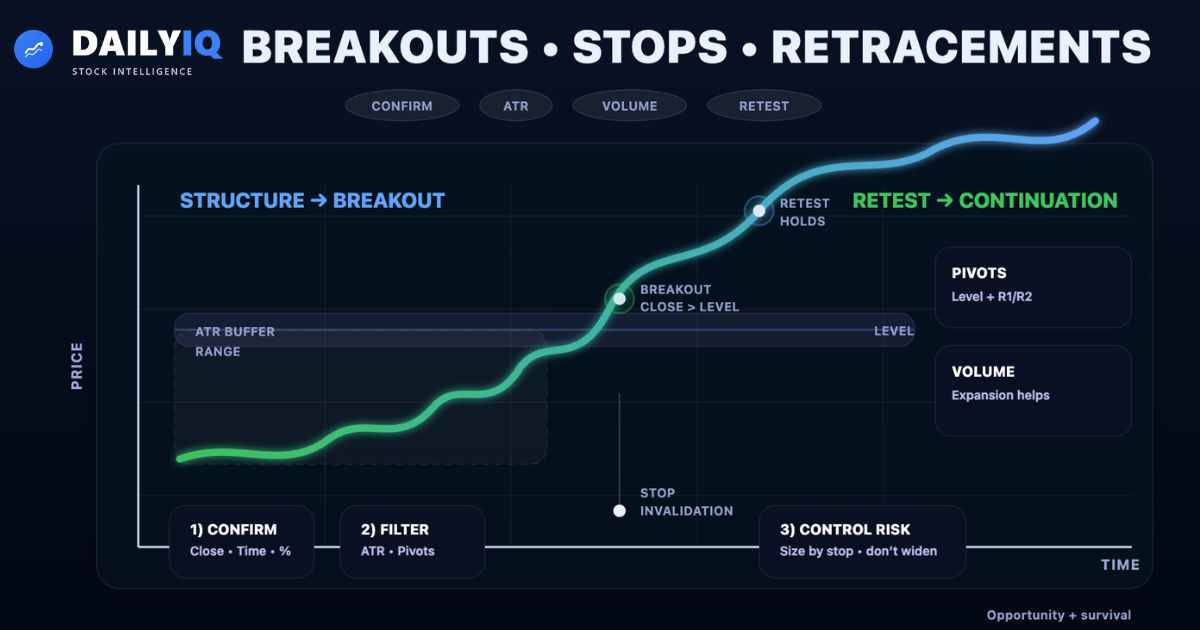
Breakouts, Stops & Retracements: The Institutional Trading Framework Master breakout confirmation, volume analysis, volatility filters, ATR methods, pivot techniques, anticipation signals, and professional stop-loss management.
Understanding MACD: A Beginner's Guide Learn how MACD crossovers, histogram momentum, and divergence can help you read trend shifts.
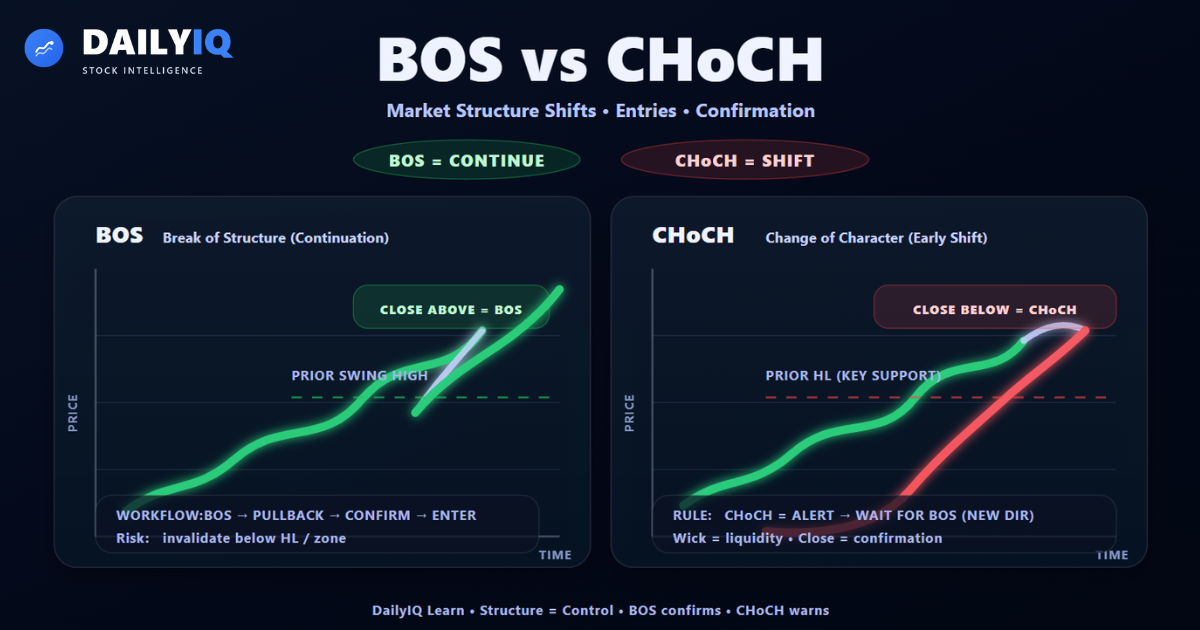
Break of Structure (BOS) and Change of Character (CHoCH) Explained Learn how Break of Structure (BOS) and Change of Character (CHoCH) reveal trend continuation and reversals - and how smart money traders use them with liquidity and imbalances.
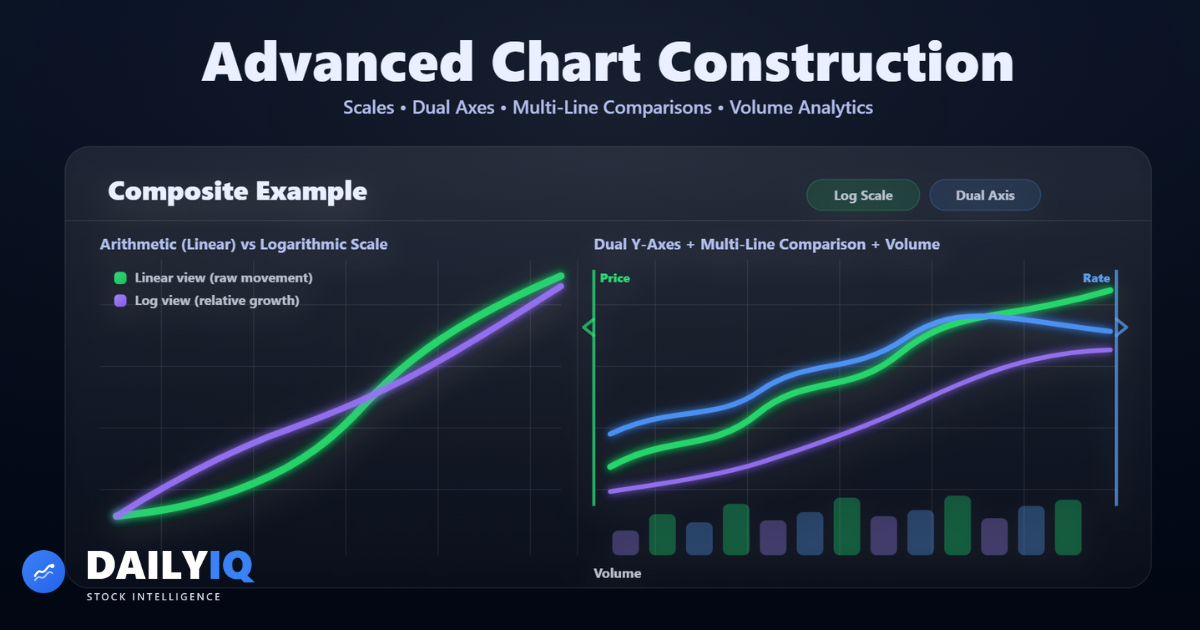
Advanced Chart Analysis: Scaling, Volume, and Comparative Charting Explained A comprehensive guide to advanced chart construction including arithmetic vs logarithmic scales, dual y-axes, multi-line comparisons, and volume-based charting techniques.
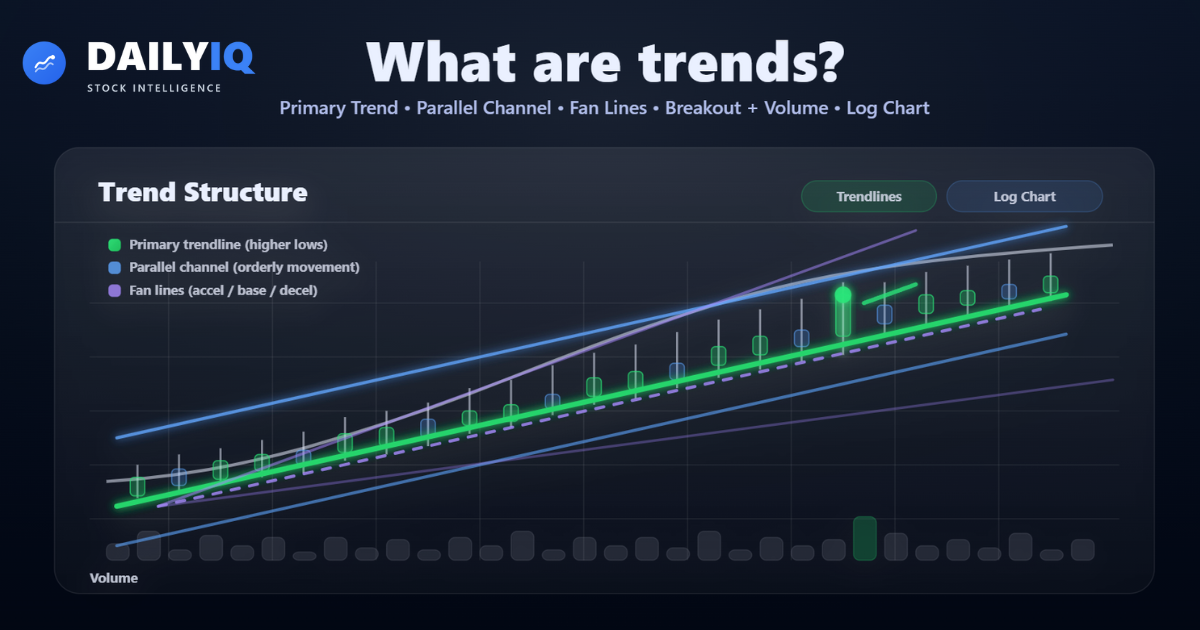
Trend Lines in Technical Analysis: The Complete Institutional Guide Master trend lines, accelerating and decelerating structures, channels, log scale, Pitchfork, Gann fans, and professional breakout confirmation.
Recent News Coverage
Most recent articles, ranked by recency (click to expand).