
How Is Bitcoin Priced?
Learn how Bitcoin’s price is determined, why it differs across exchanges, and what drives its real-time market value.
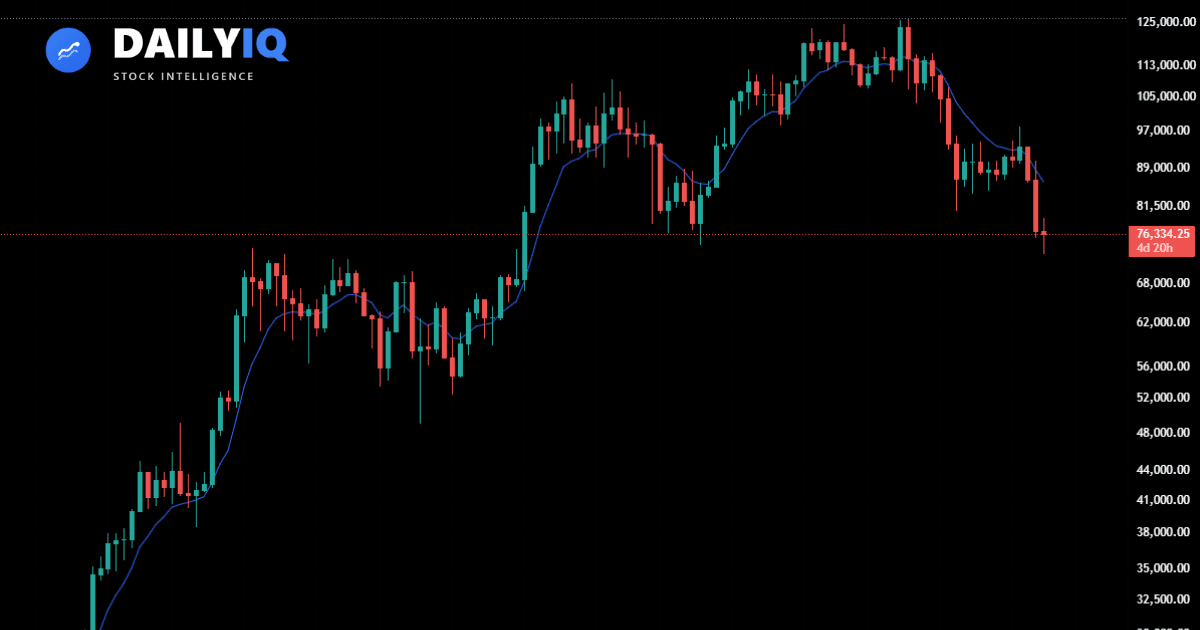
Introduction To How Is Bitcoin Priced?
Bitcoin has no central authority setting its value. No single exchange owns the price. What you see quoted at any moment is the result of continuous global trading - a live negotiation between buyers and sellers happening 24 hours a day.
Bitcoin does not have a central bank.
It does not have an official pricing authority.
There is no single company that decides what Bitcoin is worth.
So how is Bitcoin priced?
The short answer is simple:
Bitcoin’s price is determined by supply and demand on exchanges.
But the full explanation is more interesting.
Bitcoin trades 24/7 on hundreds of exchanges worldwide. The price you see at any moment reflects the most recent transaction between a buyer and a seller.
Bitcoin’s price is not set.
It is discovered.
Where Bitcoin's price comes from
Bitcoin trades on cryptocurrency exchanges such as:
- Coinbase
- Binance
- Kraken
- Bitstamp
- Bybit
Each exchange operates its own order book.
An order book contains:
- Buy orders (bids)
- Sell orders (asks)
The current price is simply the price at which the most recent trade occurred.
If buyers are willing to pay higher prices, Bitcoin rises.
If sellers accept lower prices, Bitcoin falls.
No authority adjusts it. The market determines it.
Why prices differ across exchanges
Bitcoin does not have one universal price.
Different exchanges may show slightly different prices at the same time.
This happens because:
- Liquidity differs across platforms
- Trading volume varies
- Fees differ
- Geographic demand varies
However, large price differences rarely last long.
Professional traders and algorithms use arbitrage - buying Bitcoin on one exchange and selling it on another - to eliminate pricing gaps.
This keeps global prices relatively aligned.
Supply and demand mechanics
Bitcoin’s total supply is capped at 21 million coins.
However, the circulating supply (coins actively available for trading) is smaller.
Price increases when:
- Demand increases
- Buyers aggressively lift sell orders
- New capital enters the market
Price decreases when:
- Selling pressure increases
- Large holders liquidate positions
- Demand weakens
Like any market, Bitcoin responds to order flow in real time.
The role of market liquidity
Liquidity affects how easily Bitcoin’s price moves.
In highly liquid markets:
- Large trades cause smaller price impact
- Price movements are smoother
In low-liquidity environments:
- Even moderate trades can cause sharp moves
- Volatility increases
Bitcoin is generally highly liquid compared to smaller cryptocurrencies, but liquidity still varies by exchange and time of day.
Spot vs futures pricing
Bitcoin trades in two major markets:
-
Spot market
- Actual Bitcoin is bought and sold
- Immediate settlement
-
Futures market
- Contracts representing future delivery
- Often used for leverage and speculation
Sometimes futures prices trade above spot (called a premium).
Sometimes below spot (called a discount).
Futures pricing can influence short-term volatility, especially during liquidations.
However, long-term price discovery still centers around supply and demand.
What drives Bitcoin demand?
Several factors influence demand:
- Institutional investment
- Retail adoption
- ETF flows
- Macroeconomic conditions
- Interest rates
- Inflation expectations
- Regulatory developments
- Media coverage
- Market sentiment
Bitcoin often reacts to:
- Federal Reserve policy changes
- Risk-on vs risk-off environments
- Major economic events
Although Bitcoin is decentralized, it still interacts with global financial conditions.
Mining and new supply
New Bitcoin enters circulation through mining.
Miners validate transactions and are rewarded with newly created Bitcoin.
However, the rate of new supply decreases over time through an event called the halving, which occurs roughly every four years.
During a halving:
- Mining rewards are cut in half
- New supply entering the market decreases
Reduced supply growth can impact price if demand remains steady or increases.
Market psychology and momentum
Beyond pure supply and demand, Bitcoin pricing is heavily influenced by sentiment.
Bitcoin is a volatile asset.
Price movements are often amplified by:
- Fear of missing out (FOMO)
- Panic selling
- Liquidations
- Leverage
- Social media narratives
Because Bitcoin trades 24/7 globally, reactions to news can occur instantly.
Momentum can drive rapid price swings in both directions.
How DailyIQ tracks Bitcoin pricing
DailyIQ evaluates Bitcoin price not just as a number but as a signal embedded in a broader context. Real-time spot price feeds are layered with trend and momentum analysis - EMA alignment to assess directional bias, ATR to read current volatility state, RSI to measure momentum strength, and volume to judge participation quality.
This matters because a $2,000 Bitcoin move means very different things in different conditions. During a high-ATR period with expanding volume, it can be the beginning of a sustained move. During a low-volume, range-bound environment, the same move is often noise. DailyIQ’s approach is to read the price in the context it actually exists in rather than reacting to the raw number alone.
Common misconceptions
”Bitcoin has a fixed price.” The price changes every second as new trades are matched. What you see quoted is a snapshot of the most recent transaction, not a stable reference point.
”One exchange controls Bitcoin’s value.” No single exchange sets the price. Each platform runs its own order book, and arbitrageurs keep them aligned. The “Bitcoin price” is a consensus that emerges across thousands of simultaneous markets.
”Bitcoin’s price is arbitrary.” Not quite. It reflects real forces - supply caps, demand cycles, leverage dynamics, liquidity depth, and macro sentiment. Those forces are not always rational, but they are real. Understanding them is far more useful than treating price as random noise.
Price Is Discovered, Not Set
The number you see on any Bitcoin ticker is not an official rate - it is the last price two parties agreed on. That price changes every second as new orders are matched on exchanges worldwide. Understanding price discovery helps you interpret Bitcoin movements more clearly.
Liquidity Shapes Volatility
Bitcoin is more liquid than most altcoins, but liquidity still varies by exchange, time of day, and market conditions. During low-liquidity windows, even moderate order flow can move price sharply. This is why Bitcoin can make outsized moves on relatively thin volume.
Futures Amplify, They Do Not Drive
Futures markets can accelerate Bitcoin moves through liquidations and funding rate pressure, but long-term price direction is still anchored to spot supply and demand. Understanding that distinction helps separate noise from meaningful price shifts.
Quick FAQ
Why is Bitcoin priced differently across exchanges?
Each venue has its own order book, liquidity, fees, and local demand. Arbitrage usually narrows gaps, but short-lived differences are normal.
Which Bitcoin price should I trust for execution?
Use the price on the exchange where you are actually trading. For analysis, use an index or composite feed to avoid single-venue noise.
How do futures and funding affect spot price behavior?
Leveraged futures can amplify short-term moves through liquidations. They do not replace spot supply-demand, but they can accelerate volatility around key levels.
When is Bitcoin most prone to sharp moves?
During low-liquidity windows, major macro news, and periods of crowded leverage. Thin books plus forced positioning can create outsized candles.
How can I avoid poor entries in fast crypto markets?
Use limit orders when possible, define invalidation before entry, and size smaller during volatility expansion. Execution quality matters as much as direction.
DailyIQ publishes market education, score methodology, and research workflows to help users understand what the platform is measuring. Content is for informational purposes only and is not investment advice or a recommendation to buy or sell any security.
Use education with process, not in isolation
See how DailyIQ combines technical indicators, news sentiment, freshness checks, and editorial review to decide what gets surfaced and indexed.
Learn About Investing
These resources can help investors evaluate momentum, volatility, and trend strength when analyzing How Is Bitcoin Priced?.
 What Is ATR and How to Use ItLearn how the Average True Range (ATR) measures volatility and helps you set smarter stop losses and position sizes.Volatility · 16 min read
 What Is EMA and How to Read ItLearn how the Exponential Moving Average helps you identify trend direction, momentum shifts, and dynamic support or resistance.Technical · 16 min read
 What Is RSI and How to Read ItLearn how the Relative Strength Index helps you measure momentum and identify overbought or oversold conditions.Technical · 16 min read