
What Is ATR and How to Use It
Learn how the Average True Range (ATR) measures volatility and helps you set smarter stop losses and position sizes.
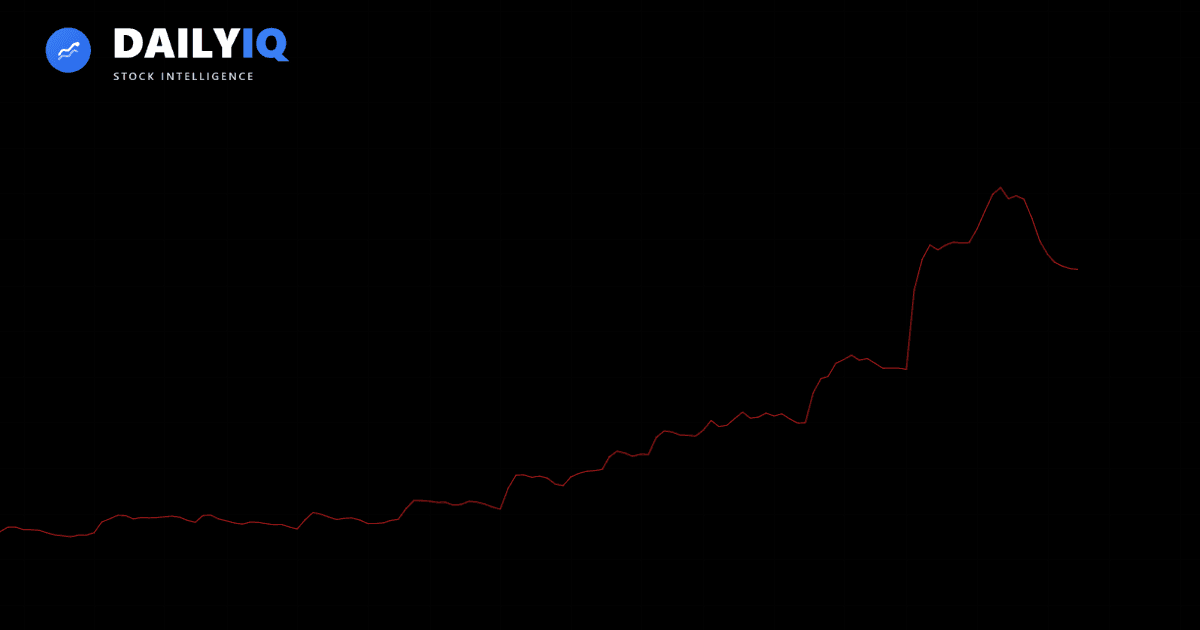
Introduction To What Is ATR and How to Use It
ATR does not tell you which direction price will move - it tells you how much it is likely to move. That single insight changes how you size positions, place stops, and manage risk across different market conditions.
The Average True Range (ATR) is a volatility indicator used to measure how much an asset typically moves over a given period.
Unlike RSI or EMA, ATR does not measure direction. It does not tell you whether price will go up or down.
Instead, ATR answers a different question:
How much is price moving?
By measuring volatility, ATR helps traders:
- Set realistic stop losses
- Adjust position size
- Identify expanding or contracting market conditions
ATR focuses on movement size - not trend bias.
How ATR works
ATR is typically calculated using 14 periods, though traders can adjust this setting depending on timeframe and strategy.
ATR begins with a value called True Range (TR).
True Range is the greatest of:
- Current High − Current Low
- Absolute value of Current High − Previous Close
- Absolute value of Current Low − Previous Close
This ensures that gaps and large overnight moves are included in the calculation.
ATR is then calculated as the smoothed average of True Range over the chosen lookback period.
For example:
- A 14-day ATR on a daily chart measures the average daily movement over 14 trading days.
- A 14-period ATR on a 1-hour chart measures the average hourly movement.
The result appears as a single line below price that rises and falls with volatility.
Reading ATR
ATR does not produce buy or sell signals on its own.
Instead, it tells you whether volatility is:
- Increasing
- Decreasing
- Stable
Rising ATR
When ATR increases:
- Price swings are expanding.
- Volatility is rising.
- Breakouts or strong moves may be developing.
Rising ATR often appears during:
- Trend acceleration
- Earnings releases
- Major news events
- Market panic
Higher ATR means larger candles and wider price movement.
Falling ATR
When ATR decreases:
- Price movement is contracting.
- Market is consolidating.
- Breakouts are less likely.
Falling ATR often appears during:
- Sideways ranges
- Low-volume environments
- Trend exhaustion
Lower ATR reflects tighter, quieter price action.
ATR and stop losses
One of ATR’s most practical uses is setting stop losses.
Instead of placing stops at arbitrary distances, many traders use multiples of ATR.
For example:
- 1 × ATR below entry
- 1.5 × ATR below entry
- 2 × ATR below entry
If a stock’s ATR is $2:
- A 2× ATR stop would be $4 away from entry.
This method adjusts stop distance based on real market volatility.
If volatility increases, stop distance widens.
If volatility decreases, stops naturally tighten.
ATR-based stops help prevent getting stopped out by normal market noise.
ATR and position sizing
ATR can also help manage risk through position sizing.
When volatility increases:
- Price moves are larger.
- Risk per share increases.
- Position size may need to decrease.
When volatility decreases:
- Price moves are smaller.
- Risk per share decreases.
- Position size may increase.
Using ATR keeps risk more consistent across different assets and conditions.
This approach is especially useful when trading:
- Futures
- Leveraged ETFs
- High-volatility stocks
ATR helps normalize risk exposure.
ATR in trending vs ranging markets
ATR behaves differently depending on market structure.
In strong trends:
- ATR often rises as price accelerates.
- Volatility expansion confirms momentum.
In range-bound markets:
- ATR gradually declines.
- Breakouts become less likely until volatility expands again.
A sharp increase in ATR after prolonged compression can signal the beginning of a new directional move.
However, ATR alone does not determine direction.
Volatility compression and expansion
Markets often cycle between:
- Volatility compression (low ATR)
- Volatility expansion (rising ATR)
A common pattern:
- ATR declines steadily during consolidation.
- Price tightens into a range.
- ATR begins rising as price breaks out.
This volatility shift often precedes sustained movement.
Recognizing compression and expansion cycles can improve trade timing.
ATR vs standard deviation
ATR and standard deviation both measure volatility, but differently.
ATR:
- Measures actual range movement.
- Includes price gaps.
- Widely used for stops and risk management.
Standard deviation:
- Measures dispersion from the mean.
- Used in Bollinger Bands.
- More statistically oriented.
ATR is typically preferred for practical trade management.
How DailyIQ uses ATR
DailyIQ offers ATR as an indicator on its stock charts. The Technical Score itself ranks momentum across the stock universe and does not use ATR. Rising ATR in a trending environment generally confirms momentum. Rising ATR in a sideways market is a warning that conditions are becoming unstable rather than directional.
A breakout during high-volatility conditions is read differently from the same price move during a quiet, low-ATR period. The distinction matters for both conviction and sizing.
Practical takeaways
ATR is one of the most underused tools for improving execution discipline. Most traders decide stop distances based on round numbers, chart appearance, or how much they are willing to lose - none of which reflect what the market actually does. ATR replaces that guesswork with a measurement that is grounded in observed price behavior.
The most practical application is simple: before placing any stop, check the current ATR and make sure the stop is at least 1× to 2× that value away from entry. Anything tighter means normal market noise will hit it before the thesis is actually wrong. Anything much wider than 2× ATR without strong structural justification usually means the position is too large for the level of risk being assumed.
ATR-based position sizing
Position sizing is one of the most critical and underappreciated aspects of trading performance. Most traders focus on finding good entry signals but give little systematic thought to how much of their capital to risk on any given trade. ATR provides a principled framework for answering this question based on actual market volatility rather than arbitrary percentage rules or gut feel.
The 1% risk rule with ATR
The core principle is simple: risk a fixed percentage of your total capital on any single trade (commonly 0.5% to 2%, with 1% being a popular default for active traders). The position size that produces that dollar risk amount depends entirely on how far your stop is from your entry — and your stop distance should be set by ATR.
Here is the full calculation:
- Determine your account size (e.g., $50,000)
- Determine your maximum risk per trade (1% = $500)
- Set your stop at 2× ATR from entry (if ATR = $2.50, stop is $5.00 below entry)
- Position size = Risk amount / Stop distance = $500 / $5.00 = 100 shares
This position size ensures that if your stop is hit, you lose exactly $500 — your predetermined maximum. If ATR doubles to $5.00, your stop widens to $10, and position size drops to 50 shares to maintain the same $500 risk. The math automatically adjusts for volatility.
Why this matters practically
Without ATR-based sizing, traders often end up with inconsistent risk exposure. A 100-share position in a volatile stock with a $10 ATR carries $1,000 of stop-related risk per trade — twice as much as the same 100 shares in a calmer stock with $5 ATR. ATR normalization removes this inconsistency and makes results more predictable across different instruments and market conditions.
ATR-based trailing stops
Trailing stops — stops that move upward as price rises in a long trade — allow profitable trades to run while limiting the amount of profit given back. ATR-based trailing stops adjust dynamically with market volatility, widening when volatility is high (to avoid being stopped out by normal noise) and tightening when volatility is low.
Basic ATR trailing stop
The simplest ATR trailing stop subtracts a multiple of ATR from the recent high:
Stop = Recent High - (N × ATR)
Where N is typically 2 to 3. As price makes new highs, the stop trails upward. If price falls more than N × ATR from its recent high, the position is closed.
With ATR at $2.50 and N = 2:
- If the stock reaches $50, your trailing stop is at $45 ($50 - $5.00)
- If the stock reaches $55, your stop moves to $50 ($55 - $5.00)
- The stop only moves up, never down
Choosing the ATR multiple for trailing stops
The choice of multiple (2×, 3×, or more) depends on your objectives:
- 2× ATR: Tighter, locks in more profit on reversals, but gets stopped out more frequently on normal volatility. Better for shorter holding periods and when you have high entry confidence.
- 3× ATR: Wider, allows more room for consolidation and minor pullbacks, but gives back more profit if the trend reverses sharply. Better for longer holding periods and trend-following strategies.
- 4× or 5× ATR: Very wide, designed to catch major trend moves while withstanding significant counter-trend volatility. Used by some systematic trend-following funds on longer timeframe positions.
ATR trailing stops on different timeframes
ATR from a daily chart produces daily-level trailing stops appropriate for swing trades. For day traders using 15-minute or 1-hour charts, the same calculation using that timeframe's ATR produces intraday trailing stops. The principle is the same regardless of timeframe — what matters is that the stop is derived from the actual volatility of the timeframe you are trading.
ATR for volatility regime detection
Beyond individual trade management, ATR is a powerful tool for reading the broader volatility regime and adjusting trading behavior accordingly. High-volatility environments and low-volatility environments require different approaches.
Identifying volatility regimes with ATR
Tracking the 14-period ATR over a 3-month or 6-month lookback period reveals whether the current volatility level is elevated, normal, or compressed relative to recent history. When current ATR is in the top quartile of its recent range, volatility is high. When it is in the bottom quartile, volatility is low.
High-ATR environments: Widen stops, reduce size
When ATR spikes significantly — often during earnings, major macro events, or market dislocations — the normal noise of price movement increases dramatically. Stops placed at typical distances will get hit repeatedly by normal volatility without the trade thesis actually being wrong. The appropriate response is to widen stops (use a higher ATR multiple) and reduce position size simultaneously, maintaining the same dollar risk but accommodating the wider expected price swings.
High-ATR environments favor shorter holding periods and wider trade selection criteria. Individual signals are less reliable because volatility makes technical signals noisier.
Low-ATR environments: Tighter stops, watch for squeezes
When ATR falls to multi-month lows, price is in a compression phase. This is when Bollinger Band squeezes are most likely to form and when breakout setups become most compelling. In low-ATR environments, stops can be placed more tightly (lower ATR multiple) because price is not swinging as much, and position sizes can be larger to maintain consistent dollar risk.
The transition from low ATR to rising ATR — when the compression begins to resolve — is one of the most important volatility signals available. This expansion phase is often where the best trending trades originate, as price begins moving more decisively after a quiet period.
ATR settings: choosing the right period
The 14-period ATR is the universal default, but like any indicator setting, the appropriate choice depends on the timeframe, instrument, and trading approach.
14-period ATR: The baseline
The 14-period setting was recommended by J. Welles Wilder Jr. in his original work and has become standard because it provides a reasonable balance between responsiveness and smoothness for most daily chart analysis. It captures approximately three weeks of trading history and smooths out single-day spikes without being so slow that it misses recent volatility changes.
7-period ATR: Faster, more responsive
A 7-period ATR responds more quickly to recent changes in price range. It gives more weight to the current environment and less to older data. This is useful when you need ATR to reflect a recent volatility shift quickly — for example, immediately after an earnings announcement when volatility has spiked. The downside is more noise: day-to-day ATR fluctuations are larger with a 7-period setting.
21-period ATR: Slower, more stable
A 21-period ATR is smoother and less reactive. It is useful for longer holding period trades where you want a stable, consistent stop distance that doesn't change significantly from one day to the next. The 21-period ATR is also useful as a regime gauge because its slower change rate makes it easier to see whether volatility is genuinely trending higher or lower versus experiencing short-term noise.
Adapting to asset class
High-volatility assets (biotech stocks, options, cryptocurrency) often benefit from higher ATR multiples because their baseline volatility is much higher than typical equities. Lower-volatility assets (large-cap dividend stocks, utilities, bond ETFs) may warrant lower multiples. The principle is always the same: the stop should be wide enough to survive normal volatility for that specific instrument, and ATR is how you measure what 'normal' means.
Practical ATR example
Walking through a complete real-world ATR application makes the concepts concrete and shows how the different pieces fit together.
Setup: A swing trade entry
Assume you are analyzing a stock that has been consolidating for three weeks and shows a potential bullish breakout setup above a key resistance level at $42.50. The current ATR (14-period daily) is $1.80.
Step 1: Set the stop using ATR
Using a 2× ATR stop: stop distance = 2 × $1.80 = $3.60. Entry at $42.75 (above resistance on the breakout), stop at $39.15 ($42.75 - $3.60).
Step 2: Calculate position size
Account size: $100,000. Risk per trade: 1% = $1,000. Position size = $1,000 / $3.60 = 277 shares (round to 275 for simplicity).
Step 3: Determine trailing stop plan
Once the trade moves into profit by 1× ATR ($1.80), begin trailing the stop at 2× ATR below the highest high reached. If the stock reaches $45, the trailing stop moves to $41.40 ($45 - $3.60).
Step 4: Identify target using ATR
A minimum reward target of 2:1 risk-reward means the first target is at $42.75 + $7.20 = $49.95 (2× the $3.60 risk). A 3:1 target would be $53.55.
What this means in practice
If the stop at $39.15 is hit, you lose exactly $990 (275 shares × $3.60). If the stock reaches the 2:1 target, you gain approximately $1,980. The math is determined before the trade begins, removing emotional decision-making from the process.
When ATR changes after entry — for example, if the stock gaps down on news and ATR expands to $3.50 — you don't necessarily close the trade. Instead, you note that the new volatility environment would require a wider stop for any new entries in similar setups. Your existing stop is already set and doesn't need to be widened on a daily basis.
Base Stop Distance on ATR, Not Gut Feel
Arbitrary stop distances - $5, 3%, one round number - ignore how the asset actually moves. A 1.5× or 2× ATR stop is grounded in real volatility. On a quiet day that stop will be narrow; during an earnings move it will be wider. ATR keeps the stop proportional.
Size Smaller When ATR Spikes
A sudden ATR spike means price is swinging further than usual. If your position size stays fixed, your dollar risk per trade has just increased. Scale position size down when ATR expands so risk stays consistent across different volatility regimes.
Watch for Compression Before Breakouts
Extended periods of declining ATR signal energy building. When volatility compresses for long enough and then begins to expand, that expansion often precedes a sustained move. ATR does not tell you the direction - but the shift itself is worth watching.
Quick FAQ
Does ATR tell me whether price will go up or down?
No. ATR measures movement size, not direction. Pair it with trend tools for directional decisions.
How do I choose an ATR stop multiple?
Use a multiple that fits your strategy and typical noise for that asset and timeframe. Many traders start around 1.5x to 2x and calibrate from results.
How does ATR help with position sizing?
Higher ATR means wider expected movement, so position size should typically be smaller to keep dollar risk consistent. Lower ATR can allow larger size.
What does a sudden ATR spike usually mean?
Volatility expansion from breakout, panic, or event-driven repricing. It often signals regime change and calls for stricter risk control.
Can ATR be used for take-profit planning?
Yes. ATR can frame realistic target ranges so exits reflect current volatility instead of arbitrary fixed distances.
Realized volatility across the market
Across the 1,003 symbols DailyIQ currently tracks with this metric, the median reads 26.5%. The middle 80% of the market sits between 15.0% and 56.1%, with the full range running from 1.49% to 366%.
Computed across DailyIQ's tracked universe and refreshed through the trading day. Figures describe the current cross-section, not a recommendation.
Definition and thresholds: Volatility
DailyIQ publishes market education, score methodology, and research workflows to help users understand what the platform is measuring. Content is for informational purposes only and is not investment advice or a recommendation to buy or sell any security.
Use education with process, not in isolation
See how DailyIQ combines technical indicators, news sentiment, freshness checks, and editorial review to decide what gets surfaced and indexed.
Learn About Investing
These resources can help investors evaluate momentum, volatility, and trend strength when analyzing What Is ATR and How to Use It.
 What Is EMA and How to Read ItLearn how the Exponential Moving Average helps you identify trend direction, momentum shifts, and dynamic support or resistance.Technical · 16 min read
 What Is RSI and How to Read ItLearn how the Relative Strength Index helps you measure momentum and identify overbought or oversold conditions.Technical · 16 min read
 What Are Heikin Ashi Candles and How to Read ThemLearn how Heikin Ashi candles smooth price action to help you identify trend strength, momentum shifts, and cleaner entries.Technical · 6 min read