
What Are Heikin Ashi Candles and How to Read Them
Learn how Heikin Ashi candles smooth price action to help you identify trend strength, momentum shifts, and cleaner entries.
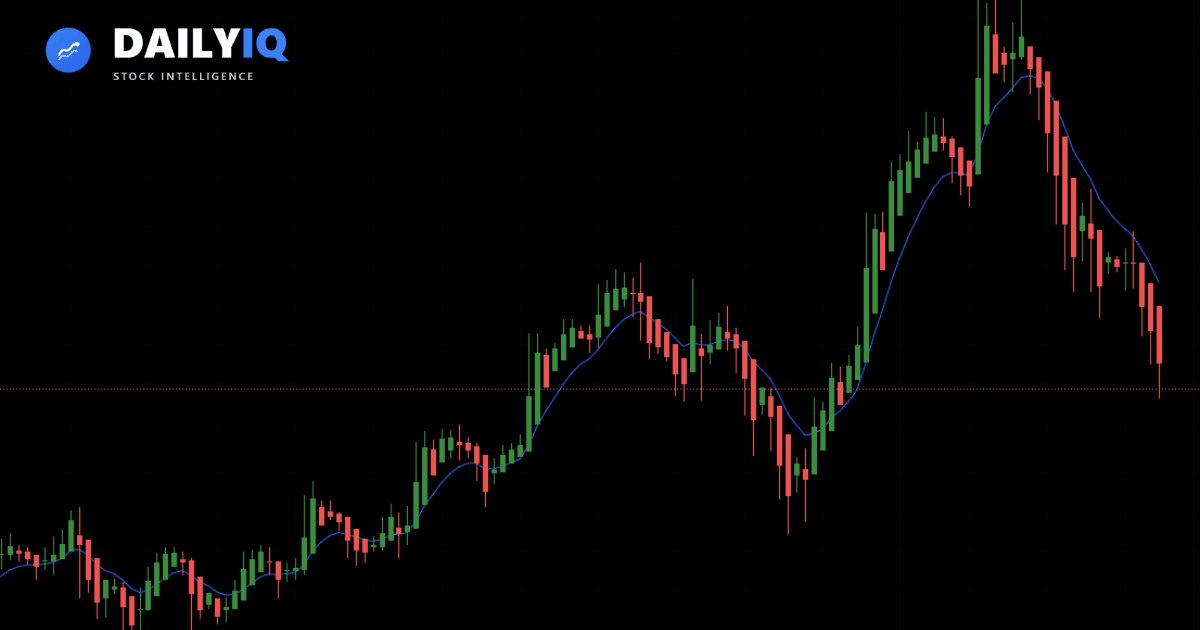
Introduction To What Are Heikin Ashi Candles and How to Read Them
Heikin Ashi candles trade precision for clarity. By smoothing raw price data, they make trends easier to hold - at the cost of showing exact market prices. Understanding that trade-off is the key to using them well.
Heikin Ashi candles are a modified type of candlestick chart designed to smooth price action and make trends easier to see.
Unlike traditional candlesticks, which display raw open, high, low, and close prices for each period, Heikin Ashi candles use averaged values. This reduces noise and filters out minor fluctuations.
The result is a chart that highlights trend direction more clearly.
Heikin Ashi helps answer a key question:
Is the market trending cleanly, or is momentum starting to weaken?
It does not replace normal candlesticks. Instead, it simplifies price structure so traders can stay aligned with the dominant move.
How Heikin Ashi works
Heikin Ashi candles are calculated differently from regular candles.
Instead of using the exact open and close of the current period, they use averaged values.
The formulas are:
- HA Close = (Open + High + Low + Close) / 4
- HA Open = (Previous HA Open + Previous HA Close) / 2
- HA High = Maximum of (High, HA Open, HA Close)
- HA Low = Minimum of (Low, HA Open, HA Close)
Because each candle depends on the previous one, Heikin Ashi creates a smoother sequence.
This smoothing effect:
- Reduces small counter-trend candles
- Highlights strong directional moves
- Makes momentum shifts easier to identify
Reading Heikin Ashi candles
Heikin Ashi is primarily used to identify trend strength and potential reversals.
Strong bullish trend
In a strong uptrend:
- Candles are mostly green (or white).
- Bodies are large.
- There are little to no lower wicks.
When you see consecutive bullish candles with small or no lower shadows, it suggests strong upward momentum.
Strong bearish trend
In a strong downtrend:
- Candles are mostly red.
- Bodies are large.
- There are little to no upper wicks.
Consecutive bearish candles without upper shadows indicate strong selling pressure.
Trend weakening signals
Heikin Ashi makes transitions easier to spot.
Signs of potential weakening:
- Smaller candle bodies
- Appearance of both upper and lower wicks
- Color change after a strong trend
When candle bodies shrink and shadows appear on both sides, it may signal consolidation or a coming reversal.
However, one candle alone is not confirmation. Context still matters.
Heikin Ashi vs traditional candlesticks
Traditional candlesticks:
- Show exact price action.
- Provide precise entry and exit levels.
- Reveal gaps and intraday volatility.
Heikin Ashi candles:
- Smooth price action.
- Reduce noise.
- Highlight trends more clearly.
- Do not reflect exact price values.
Because Heikin Ashi uses averages, the open and close shown are not the actual market prices.
For this reason:
- Many traders analyze trend with Heikin Ashi.
- But execute trades using normal candlesticks.
Heikin Ashi in trending vs ranging markets
Heikin Ashi performs best in trending markets.
In strong trends:
- Candles stay one color for extended periods.
- Pullbacks appear smoother.
- Trend continuation becomes clearer.
In range-bound markets:
- Candle colors switch frequently.
- Signals become less reliable.
- Noise reduction helps, but trend clarity decreases.
Understanding overall market structure improves Heikin Ashi interpretation.
Using Heikin Ashi for entries and exits
Traders often use simple rules with Heikin Ashi.
Trend-following approach:
- Enter when a strong candle forms in trend direction.
- Stay in trade while candles remain strong and consistent.
- Exit when opposite color candles appear with strong wicks.
Some traders combine Heikin Ashi with:
- EMA for trend direction
- RSI for momentum confirmation
- Support and resistance levels
- Volume analysis
Heikin Ashi works best as a trend filter rather than a standalone signal generator.
Heikin Ashi and momentum shifts
One of the most valuable features of Heikin Ashi is how clearly it shows transitions.
Common transition pattern:
- Strong candles with no opposite wicks
- Smaller candle with both wicks
- Color shift
This sequence often signals slowing momentum before a potential reversal.
However, in strong trends, temporary color changes can be false signals. Always confirm with broader structure.
How DailyIQ uses Heikin Ashi
DailyIQ offers Heikin Ashi as a candle style on its stock charts. The Technical Score itself ranks momentum across the stock universe and does not use Heikin Ashi candles. Consistent large-body candles with minimal opposing wicks in the trend direction suggest steady momentum. When bodies start shrinking and shadows appear on both sides, momentum is deteriorating - not a reversal call, but a reason to reduce confidence in trend continuation.
Practical takeaways
The key discipline when using Heikin Ashi is keeping it in its proper role: trend reading, not trade execution. Because the values are averages of averages, the open and close shown do not represent real market prices. Placing stop losses or calculating position sizes based on Heikin Ashi prices will result in inaccurate risk management. Always switch to standard candlesticks for actual execution decisions.
In practice, the most useful Heikin Ashi signal is the absence of opposing wicks during a strong trend. When consecutive candles have no lower shadow in an uptrend, it means every session opened near its low and closed near its high - genuine directional conviction. When that pattern breaks and wicks begin appearing, momentum is telling you something has changed, even if price has not confirmed it yet.
Use It for Trend Reading, Not Execution
Because Heikin Ashi values are averages, they do not reflect actual tradable prices. Use the chart to read trend strength and spot momentum shifts, then switch to standard candlesticks to identify actual entry and exit prices with precision.
Wicks on Both Sides Are a Warning
In a strong trend, Heikin Ashi candles have little to no wick on the opposite side. When both upper and lower shadows begin to appear together, it is a sign that momentum is weakening and the trend may be entering a transitional phase. Watch for this shift before assuming continuation.
One Color Change Is Not Enough
A single candle color change in a strong trend is often noise. In active uptrends, temporary red candles appear without marking actual reversals. Wait for sustained color change, shrinking bodies, and confirmation from structure or momentum before treating a shift as meaningful.
Quick FAQ
Can I execute trades using Heikin Ashi prices?
You can, but execution is usually better on standard candlesticks because Heikin Ashi values are averaged and may not match tradable market prices exactly.
Is one color change enough to call a reversal?
No. Treat it as an early alert. Reversal quality improves when structure breaks, momentum weakens, and follow-through confirms.
What is the best use of Heikin Ashi?
Trend filtering. It helps you stay with directional moves longer by reducing visual noise from minor countertrend candles.
When does Heikin Ashi perform poorly?
In choppy, range-bound markets where candle colors alternate frequently and follow-through is limited.
Which indicators pair well with Heikin Ashi?
EMA for directional bias, RSI or MACD for momentum, and key support/resistance for trade location and invalidation.
DailyIQ publishes market education, score methodology, and research workflows to help users understand what the platform is measuring. Content is for informational purposes only and is not investment advice or a recommendation to buy or sell any security.
Use education with process, not in isolation
See how DailyIQ combines technical indicators, news sentiment, freshness checks, and editorial review to decide what gets surfaced and indexed.
Learn About Investing
These resources can help investors evaluate momentum, volatility, and trend strength when analyzing What Are Heikin Ashi Candles and How to Read Them.
 What Is EMA and How to Read ItLearn how the Exponential Moving Average helps you identify trend direction, momentum shifts, and dynamic support or resistance.Technical · 16 min read
 What Is RSI and How to Read ItLearn how the Relative Strength Index helps you measure momentum and identify overbought or oversold conditions.Technical · 16 min read
 Understanding MACD: A Beginner's GuideLearn how MACD crossovers, histogram momentum, and divergence can help you read trend shifts.Technical · 16 min read