
The Basic Principle of Technical Analysis - The Trend
Understand how trends form, why they matter, how they are identified, and the core assumptions technical analysts rely on when studying market price behavior.
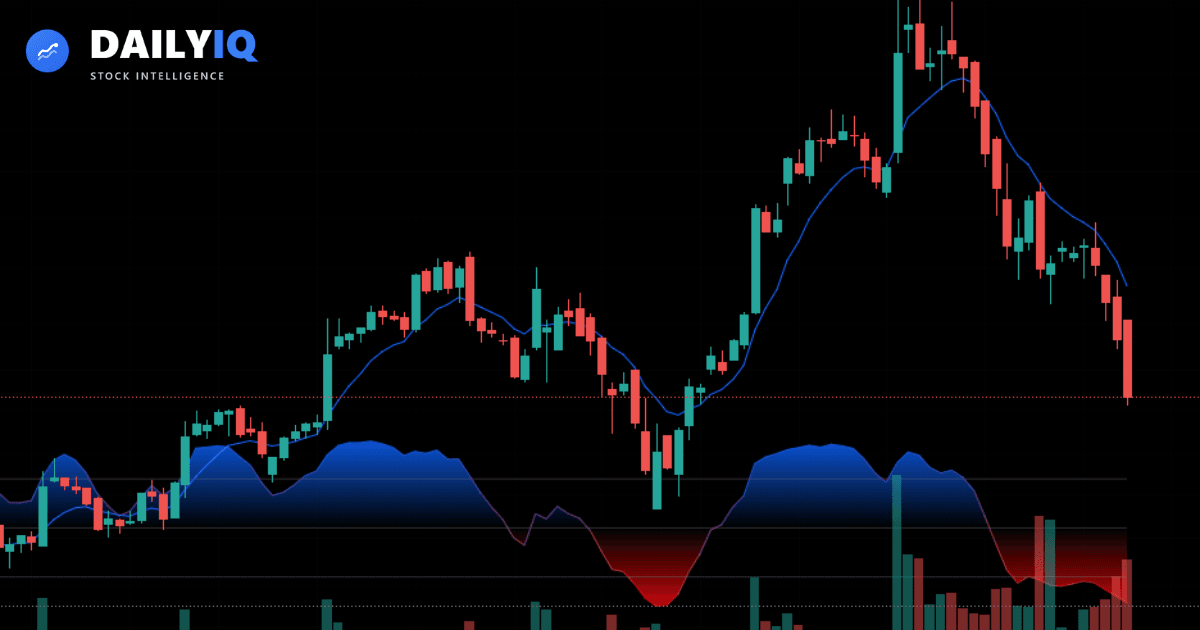
Introduction To The Basic Principle of Technical Analysis - The Trend
The single most important concept in technical analysis is the trend. Everything else - indicators, patterns, oscillators - only matters in the context of which direction the market is moving.
Technical analysis rests on one central idea:
Market prices tend to move in trends.
The goal of the technical analyst is not to predict every fluctuation. Instead, the objective is to:
- Detect emerging trends early
- Participate while evidence supports continuation
- Exit when evidence shifts
- Protect capital throughout the process
This sounds simple in theory - buy early, ride the move, and sell before reversal.
In reality, it requires structure, discipline, and risk management.
Why Trends Matter
Trends are where profits are made.
If price moves randomly, opportunity disappears. But when price develops sustained directional movement, traders and investors can align themselves with that movement.
However:
- Trends rarely move in straight lines
- Counter-moves occur inside larger trends
- False signals happen
- Sudden reversals are possible
This is why trend participation must always include risk control.
Successful technical analysis depends on two critical decisions:
- When to enter
- When to exit (for profit and for loss)
Predefined exit levels prevent small mistakes from becoming large losses.
What Is a Trend?
A trend is a directional price movement that persists long enough to be identified and acted upon profitably.
There are three primary types:
Uptrend
An uptrend forms when price makes:
- Higher highs
- Higher lows
Each rally exceeds the previous rally.
Each pullback holds above the prior low.
Downtrend
A downtrend forms when price produces:
- Lower highs
- Lower lows
Each bounce fails below the previous peak.
Each decline pushes lower.
Sideways Trend
A sideways (range-bound) trend occurs when:
- Highs and lows remain relatively horizontal
- No sustained upward or downward direction develops
Although textbook diagrams appear clean, real markets are messy. Trends include noise, retracements, and emotional swings.
Trends Exist Across Timeframes
Trends are not confined to one timeframe.
They are commonly classified as:
- Primary Trend - Months to years
- Secondary Trend - Weeks to months
- Short-Term Trend - Days
- Intraday Trend - Minutes or hours
Shorter trends exist within longer ones.
A short-term decline can occur inside a strong long-term uptrend.
This multi-layered structure is often described as fractal behavior - similar patterns repeating across different scales.
Your relevant trend depends entirely on your time horizon.
How Trends Are Identified
No single method guarantees accuracy. Analysts combine structure and tools to form probabilistic conclusions.
1. Price Structure
The most fundamental method is observing highs and lows:
- Higher highs + higher lows = uptrend
- Lower highs + lower lows = downtrend
Structural breaks often signal potential reversals.
2. Moving Averages
Moving averages smooth short-term fluctuations.
They help:
- Reduce noise
- Clarify directional bias
- Identify momentum shifts
When price consistently holds above a rising average, an uptrend may be intact.
3. Trend Lines
Trend lines connect significant highs or lows.
They provide:
- A visual sense of slope
- Dynamic support or resistance
- Early warning signals if broken
A decisive break of a well-established trend line may signal changing momentum.
4. Statistical Methods
Linear regression can estimate average direction over time.
However, statistical confirmation often lags. By the time enough data confirms a trend, it may already be changing.
For this reason, many analysts prioritize structure over pure statistics.
Trends Develop from Supply and Demand
At its core, price reflects supply and demand.
Every transaction represents agreement between:
- A buyer willing to pay
- A seller willing to accept
When buyers become more aggressive, prices rise.
When sellers dominate, prices fall.
Technical analysis focuses on price because price represents the collective result of:
- Information
- Expectations
- Fear and optimism
- Liquidity needs
- Speculation
Rather than analyze every fundamental input, technical analysts study the output: price behavior.
Core Assumptions of Technical Analysis
Beyond the belief that markets trend, technical analysis rests on several foundational assumptions.
1. Price Is Driven by Supply and Demand
Investor psychology influences buying and selling decisions.
Fear, greed, and expectations shape price movement.
2. Price Discounts Everything
All known information - including interpretations and expectations - is assumed to be embedded in price.
Instead of analyzing every input, the analyst studies the result.
3. Prices Are Not Purely Random
While markets can appear chaotic, technical analysts believe structured behavior emerges because human reactions are not random.
4. History Tends to Echo Itself
Exact repetition is rare.
Behavioral repetition is common.
Similar conditions often produce similar market responses.
5. Patterns Are Fractal
Patterns appear across multiple timeframes.
A formation on a five-minute chart may resemble one on a monthly chart.
This reflects consistent behavioral tendencies across different horizons.
Emotional Feedback Loops
Markets are influenced by emotional reinforcement cycles.
- Rising prices create confidence → more buying → further rises
- Falling prices create fear → more selling → further declines
These feedback loops can produce:
- Bubbles
- Panic selloffs
- Overshooting beyond equilibrium
Eventually, extremes revert - often swinging too far in the opposite direction.
Understanding these emotional cycles helps explain why trends accelerate and eventually reverse.
Risk Management: The Hidden Foundation
Even perfect trend identification cannot eliminate uncertainty.
Technical success requires:
- Defined exit levels
- Acceptance of small losses
- Capital preservation
- Discipline over prediction
Without risk management, even correct analysis can fail.
The objective is not certainty.
It is structured probability.
Trend Direction Is the First Question
Before evaluating any indicator, pattern, or signal, establish the prevailing trend. Every piece of analysis that follows should be interpreted in that light - with-trend signals are higher probability, counter-trend signals require more confirmation and smaller size. This single habit separates disciplined traders from reactive ones.
Pullbacks Are Part of the Trend, Not Against It
No trend moves in a straight line. Counter-moves within a larger trend are normal - they reset sentiment, shake out weak holders, and create the next entry point. The ability to stay patient through a pullback and distinguish it from an actual reversal is one of the most valuable skills in trend trading.
Probability, Not Certainty
Technical analysis does not predict the future - it tilts probability in your favor when applied consistently. A correct read on trend direction does not guarantee every trade works. What it does is ensure that when trades do work, they tend to work in size, and when they fail, they fail with the predefined loss already known and accepted.
Quick FAQ
What is the fastest way to identify trend direction?
Start with structure first: higher highs and higher lows for uptrends, lower highs and lower lows for downtrends. Use moving averages only as confirmation, not as the primary definition.
How do I tell a pullback from a real reversal?
A pullback usually holds prior structure. A reversal usually breaks structure, fails to reclaim key levels, and is often supported by momentum and volume deterioration.
What if different timeframes disagree?
Prioritize the timeframe that matches your holding period. Treat lower-timeframe signals against the higher-timeframe trend as tactical, smaller-size trades.
Where should stops go in trend trading?
Place stops where your trend thesis is invalidated, usually beyond a recent swing level or a volatility-adjusted buffer. Avoid arbitrary fixed-dollar stops.
Can trend analysis work without indicators?
Yes. Price structure alone can define trend. Indicators can improve consistency, but they should support structure rather than replace it.
Trend strength across the tracked universe
Across the 1,090 symbols DailyIQ currently tracks with this metric, the median reads 50/100. The middle 80% of the market sits between 11/100 and 90/100, with the full range running from 0/100 to 100/100. Right now 372 symbols read above 65/100 and 365 below 35/100 — which is the practical answer to how common that condition actually is, rather than how common the textbook implies.
Computed across DailyIQ's tracked universe and refreshed through the trading day. Figures describe the current cross-section, not a recommendation.
Definition and thresholds: Trend
DailyIQ publishes market education, score methodology, and research workflows to help users understand what the platform is measuring. Content is for informational purposes only and is not investment advice or a recommendation to buy or sell any security.
Use education with process, not in isolation
See how DailyIQ combines technical indicators, news sentiment, freshness checks, and editorial review to decide what gets surfaced and indexed.
Learn About Investing
These resources can help investors evaluate momentum, volatility, and trend strength when analyzing The Basic Principle of Technical Analysis - The Trend.
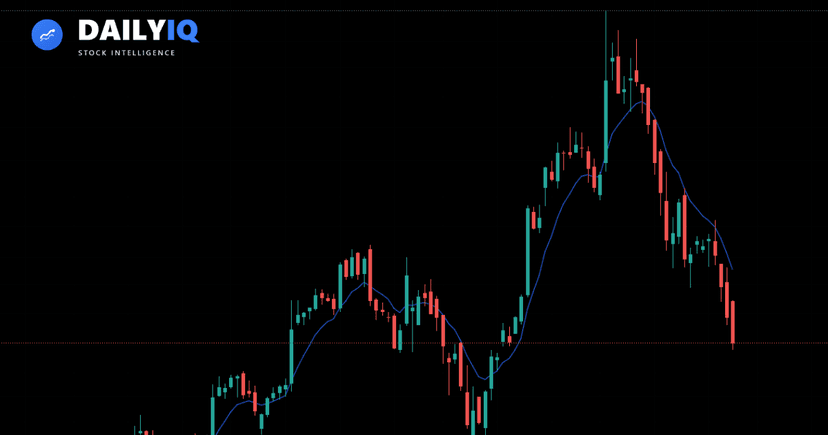 What Is EMA and How to Read ItLearn how the Exponential Moving Average helps you identify trend direction, momentum shifts, and dynamic support or resistance.Technical · 16 min read
 What Is ATR and How to Use ItLearn how the Average True Range (ATR) measures volatility and helps you set smarter stop losses and position sizes.Volatility · 16 min read
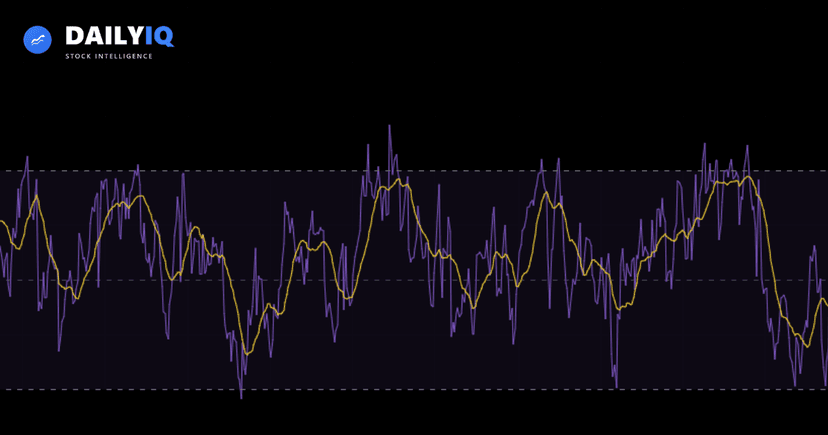 What Is RSI and How to Read ItLearn how the Relative Strength Index helps you measure momentum and identify overbought or oversold conditions.Technical · 16 min read
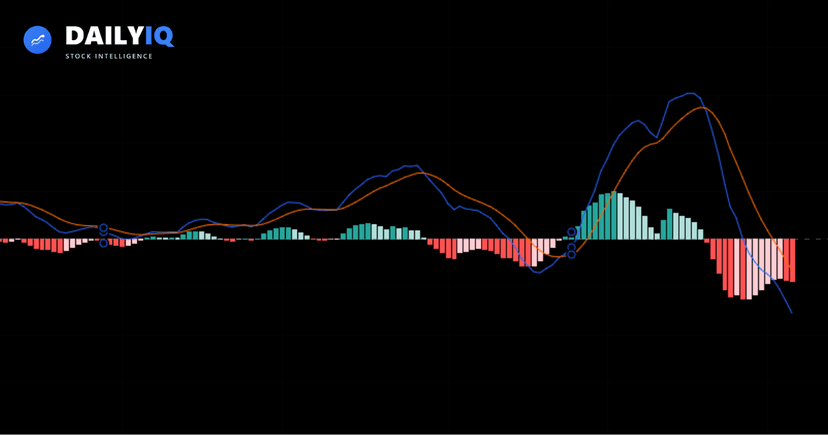 Understanding MACD: A Beginner's GuideLearn how MACD crossovers, histogram momentum, and divergence can help you read trend shifts.Technical · 16 min read
 Trend Lines in Technical Analysis: The Complete Institutional GuideMaster trend lines, accelerating and decelerating structures, channels, log scale, Pitchfork, Gann fans, and professional breakout confirmation.Technical · 22 min read
 What Are Heikin Ashi Candles and How to Read ThemLearn how Heikin Ashi candles smooth price action to help you identify trend strength, momentum shifts, and cleaner entries.Technical · 6 min read