
Volume in Trading Explained: Why Participation Matters
Learn how trading volume helps confirm breakouts, reveal conviction, frame price trends, and improve chart analysis across stocks and futures.
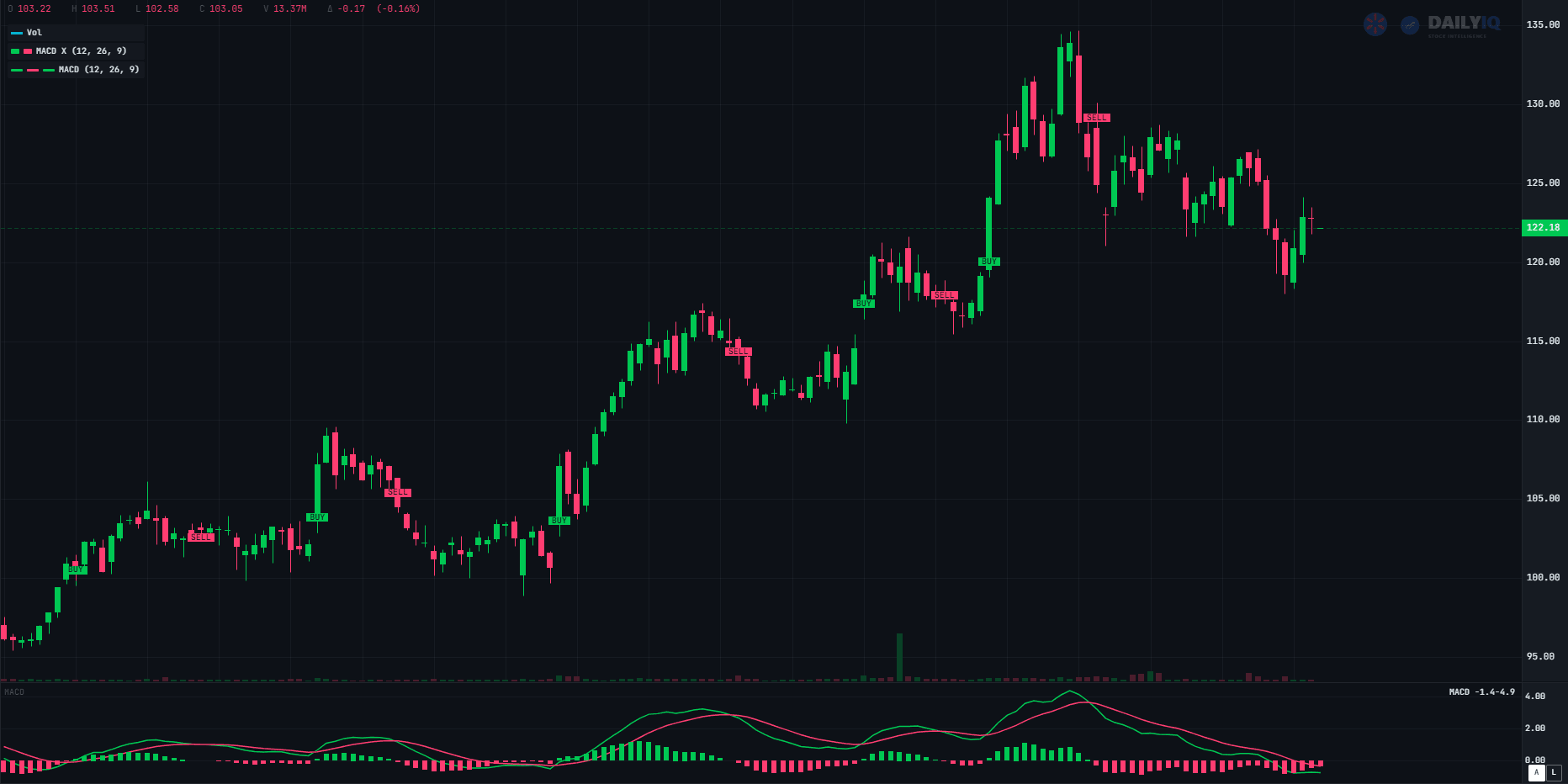
Introduction To Introduction To Volume
Volume tells you how much participation sits behind a move. Price shows direction, but volume helps answer a harder question: how much conviction is behind that direction? A breakout on strong volume is a very different event from the same breakout on weak volume -- and knowing the difference changes how you trade it.
A few of the most important ideas traders should understand are:
- Unusually high volume often signals that the market is preparing for a meaningful move
- Volume is relative, not absolute
- A breakout supported by a clear volume surge is usually more trustworthy than a breakout on weak participation
That does not mean every high-volume candle is bullish or every low-volume candle is bearish. It means volume gives context to price. It can show when demand is pressing harder, when supply is becoming more active, when a breakout is attracting real participation, and when a move may be running out of energy.
Volume also appears in different forms:
- classic bars under price
- Volume Profile / Volume at Price
- VWAP
- Equivolume
- Open Interest in futures markets
Each one answers a slightly different question. Together, they help traders move beyond “price went up” or “price went down” and toward a more complete view of how the market is behaving.
Why volume matters: the missing layer behind price movement
Price tells you where the market moved. Volume helps explain how much participation stood behind that move. That is why volume matters so much in technical analysis. Without volume, a chart can still show trend, support, resistance, and momentum, but it lacks a major piece of context: conviction.
One of the best practical ideas in volume analysis is that unusually large volume often warns that the market is getting ready to do something important. That does not guarantee direction. A high-volume session can precede a reversal, a breakout, a breakdown, or an acceleration in the current trend. What it does suggest is that the market is no longer drifting quietly. More participants are involved, more urgency is present, and the move deserves closer attention.
This is why strong traders do not treat volume as a decorative row of bars under the chart. They treat it as a message about participation. A quiet pullback on shrinking volume tells a very different story from a pullback that comes with expanding volume. Likewise, a breakout above resistance means much more when volume surges than when price barely pokes through the level on thin activity.
Another key principle is that volume is relative. A volume number means almost nothing in isolation. Five million shares might be huge for one stock and completely normal for another. Even for the same symbol, today’s volume needs to be compared with recent history. That is why relative volume is far more useful than raw volume alone. Traders should ask:
- Is today’s volume above recent average?
- Is this bar unusually active compared with the last few weeks?
- Is volume increasing as price expands?
- Is volume fading while price drifts?
Those questions are far more valuable than staring at a single number.
Volume also helps traders distinguish between conviction and fragility. If price is rising while volume expands, it often suggests stronger participation behind the move. If price is rising while volume contracts, it may suggest the move is becoming less broadly supported. That does not mean the market must reverse immediately, but it tells you to be more careful. In the same way, falling price on expanding volume can suggest heavier supply pressure, while falling price on fading volume may imply that the selloff is losing sponsorship.
This is especially helpful around important technical areas. Suppose price has been pressing against resistance for several sessions. A push through that level on weak volume may fail quickly, because not enough traders supported the move. A breakout that comes with a visible volume expansion is more credible because it shows participation increased at the exact moment price needed confirmation.
Volume is also useful because it changes the way traders think about trends. Trends are not just lines sloping up or down. Trends are auctions. They continue when buyers or sellers remain active enough to absorb the other side. Volume helps us infer when that participation is strengthening, fading, or rotating.
How to read price and volume together: breakouts, trend confirmation, and hidden weakness
Reading volume correctly means combining it with price rather than analyzing it by itself. A volume bar has no meaning until it is attached to a price event. The most useful question is never “Was volume high?” The useful question is “What was price doing while volume changed?”
A classic framework is to observe four broad combinations:
- Price rising + volume rising
- Price rising + volume falling
- Price falling + volume rising
- Price falling + volume falling
These combinations are not absolute trading rules, but they help frame the market’s message. When price rises while volume rises, it often suggests stronger demand or stronger participation behind the advance. That is usually healthier than a rally on shrinking volume. When price rises while volume fades, the move may still continue, but it can suggest demand is becoming thinner. The market is climbing, but fewer traders are joining. That can make the move less stable.
The same idea works on the downside. If price is falling and volume expands, supply pressure may be increasing. If price is falling but volume dries up, it can mean the decline is less forceful than it appears. Again, context matters. In some cases, shrinking volume on a pullback during an uptrend is constructive because it suggests sellers are less committed. In other cases, shrinking volume during a rally into resistance may imply the breakout attempt lacks sponsorship.
One of the most practical volume signals is breakout confirmation. A breakout is not automatically valid just because price moves above resistance or below support. Traders want evidence that the move is being accepted. A strong volume surge at the breakout point is one of the clearest signs that the market agrees with the move. This is why breakout traders pay so much attention to volume spikes. If price leaves a consolidation zone and volume expands sharply, that suggests the breakout is attracting new participation instead of just drifting through the level.
This matters because price can slip above resistance on low activity and then fall right back into the range. Thin breakouts are vulnerable. The market briefly moved beyond the level, but not enough traders cared. By contrast, when price breaks out and volume expands meaningfully relative to recent sessions, the move carries more weight. The market is essentially saying: this level was important, and enough participants acted here to make the move matter.
Volume also helps interpret consolidations. If a stock moves sharply upward and then starts moving sideways while volume declines, that can be healthy. It may suggest the market is pausing without heavy profit-taking. Then, if volume suddenly returns as price pushes out of the base, the breakout becomes more credible. This pattern appears often in trend continuation setups.
Another subtle use of volume is identifying disagreement between price and participation. If price is still grinding higher, but volume is falling and every breakout attempt is weakly supported, the trend may be maturing. That does not mean traders should instantly fade the move. It means they should stop treating every new high as equally strong. Price may still be advancing, but the quality of that advance may be deteriorating.
How volume is displayed: standard volume bars, volume profile, VWAP, and equivolume
Volume is not a single tool. It is a category of tools. Most traders first meet volume as vertical bars plotted beneath price, and that remains one of the most useful ways to view it. Standard volume bars are good for seeing whether participation is expanding or shrinking over time. They are simple, fast to read, and especially useful for breakout confirmation, trend monitoring, and spotting unusual outliers.
But charting platforms also display volume in other ways, and each method emphasizes a different dimension of market behavior.
The first is Volume Profile, also called Volume at Price. Instead of plotting volume by time, it plots volume horizontally at the prices where trading occurred. This answers a different question: not “when was volume high?” but “at which prices did the market transact the most?” That makes volume profile useful for identifying price zones where heavy business occurred. These areas often matter because they can behave like support, resistance, or magnets for price. A major node in the profile often marks a level where a lot of buyers and sellers previously agreed on value. On many platforms, the highest-volume price inside the profile is called the point of control, and it can be an especially important reference level.
The second is VWAP, or Volume Weighted Average Price. VWAP calculates the average traded price across the session, but weights each transaction by its volume. That makes it more meaningful than a simple average price. Institutions often use VWAP as a benchmark because it helps measure execution quality. If a trader buys significantly above VWAP in size, their execution may have been poor relative to the session’s average traded price. For intraday traders, VWAP also becomes a practical reference line. Price above VWAP can suggest stronger intraday positioning, while price below VWAP can suggest weaker positioning. It is not magic, but it is a widely respected reference because it blends price and participation into a single statistic.
The third is Equivolume. In an equivolume chart, the width of the price bar expands or contracts based on volume. Wide bars show stronger volume; narrow bars show lighter volume. The idea is to make price and participation visually inseparable. Rather than seeing one chart for price and another strip for volume, the chart itself becomes volume-sensitive. This can help traders notice whether a breakout, rally, or pullback happened with strong participation. It is not as universally used as standard bars or VWAP, but it is a clever way to visualize the relationship between price movement and activity.
Each display method answers a different question:
- Standard volume bars → how participation changed over time
- Volume Profile → where participation clustered by price
- VWAP → the session’s volume-weighted benchmark
- Equivolume → how much participation sat behind each price bar visually
For DailyIQ, the best approach is not to treat one format as superior in all cases. Instead, use them for what they do best. Use standard bars for breakout confirmation and relative activity. Use Volume Profile for major acceptance zones. Use VWAP for intraday context and execution framing. Use Equivolume as a visual relationship tool when you want price and participation shown together. That way volume becomes a full framework, not just a row of bars.
Open interest, seasonal volume, and how DailyIQ should use volume realistically
Volume becomes even more powerful when you understand that it is not the only participation metric. In futures markets, traders also watch open interest. Volume tells you how many contracts changed hands during a period. Open interest tells you how many contracts remain open. Those are not the same thing, and the difference matters.
If two traders create a brand-new futures contract between them, open interest increases. If an existing long exits against an existing short and the contract is closed, open interest falls. If contracts trade hands but no new net exposure is created, volume can increase while open interest stays unchanged. This is why futures traders care about both metrics together. Rising price with rising volume and rising open interest often suggests fresh participation supporting the move. Rising price with falling open interest can imply short covering rather than aggressive new buying. Falling price with rising open interest can suggest new short exposure entering the market. Falling price with falling open interest can suggest liquidation rather than confident fresh selling.
That makes open interest especially useful for understanding the character of a futures move. Is a rally being driven by new buyers? Or is it mostly shorts being forced out? Is a selloff being fueled by fresh bearish conviction? Or is it mainly long liquidation? Those are different market conditions even if the price move looks similar on the surface.
Volume also has a strong time-based behavior that traders often overlook. Markets do not distribute participation evenly through the day, week, month, or year. Intraday, volume is often U-shaped. Activity is usually strongest near the open, fades during midday, and increases again toward the close. This matters because a lunchtime drift does not carry the same informational weight as an opening drive or a closing expansion. Breakouts that happen when the market is sleepy deserve different treatment from breakouts that happen when participation is surging.
Seasonally, some periods tend to be quieter than others. Holiday weeks are often lighter. Summer trading can be thinner than more active periods. End-of-quarter windows, index rebalancing, and option expiration can bring higher activity. These tendencies should not be used like rigid prediction rules, but they do affect how traders interpret relative volume. A “good” volume day during a quiet summer week may still look smaller in raw terms than a typical winter session, yet still be meaningful relative to its immediate environment.
Late-stage trends also interact with volume in useful ways. Some exhausted markets drift on weaker participation as enthusiasm fades. Other moves accelerate on expanding volume because the market is in a more urgent phase. The key is not to force one narrative on every chart. The key is to ask: is participation expanding, contracting, or rotating at the moment price is trying to do something important?
This is how DailyIQ should use volume realistically. Not as a one-line signal like “high volume = bullish,” but as a layered context engine. A smart volume model might include:
- relative volume versus recent average
- breakout or breakdown confirmation
- VWAP position for intraday context
- volume profile nodes for support and resistance
- open interest in futures for participation quality
- seasonal or intraday regime awareness
- warnings when price moves on unusually weak participation
That approach keeps the analysis grounded. Volume is not magic. It is the market’s participation footprint. Used properly, it helps traders judge whether price is acting alone or being backed by meaningful interest.
Price Moves on Volume, Not Instead of It
A price move on strong volume is backed by real participation -- many participants agreed on that price. A price move on weak volume is tentative -- fewer participants were willing to transact at that level. Trend moves that develop on rising volume are more likely to continue. Trend moves on declining volume are more likely to stall or reverse.
Relative Volume Matters More Than Absolute Volume
A stock that trades 2 million shares on a day when its average is 500k is doing something very different from a stock that trades 2 million shares on a day when its average is 5 million. Always compare current volume to recent norms -- relative volume surge is what signals unusual participation, not raw share count.
Volume Profile Tells You Where Price Was Accepted
Bar charts show where price traded -- volume profile shows where volume concentrated. High-volume nodes represent price levels where participants did a lot of business; those become structural reference points. Low-volume gaps are areas where price transacted quickly and is likely to move through again with less friction. This distinction helps identify where price will find support versus where it will just slide.
Quick FAQ
Why is volume important in trading?
Volume helps measure participation and conviction. It can confirm breakouts, strengthen trend analysis, and warn when price is moving on weak sponsorship.
What does high volume usually mean?
High volume usually means more traders are active at that moment. It often appears during breakouts, reversals, news-driven moves, or strong trend expansions.
What is the difference between volume and open interest?
Volume shows how many contracts or shares traded during a period. Open interest shows how many futures contracts remain open. In futures, using both gives a clearer view of participation quality.
What is VWAP used for?
VWAP is a volume-weighted price benchmark for the session. Institutions use it to judge execution quality, and traders often use it as an intraday context line.
What is volume profile?
Volume profile shows where trading occurred by price rather than by time. It helps identify high-activity price zones that can act as support, resistance, or value areas.
DailyIQ publishes market education, score methodology, and research workflows to help users understand what the platform is measuring. Content is for informational purposes only and is not investment advice or a recommendation to buy or sell any security.
Use education with process, not in isolation
See how DailyIQ combines technical indicators, news sentiment, freshness checks, and editorial review to decide what gets surfaced and indexed.
Learn About Investing
These resources can help investors evaluate momentum, volatility, and trend strength when analyzing Volume in Trading Explained: Why Participation Matters.
 Break of Structure (BOS) and Change of Character (CHoCH) ExplainedLearn how Break of Structure (BOS) and Change of Character (CHoCH) reveal trend continuation and reversals - and how smart money traders use them with liquidity and imbalances.Technical · 23 min read
 Fair Value Gaps, Imbalances, and Supply Demand Inefficiencies ExplainedLearn how Fair Value Gaps (FVG), imbalances, and supply-demand inefficiencies form, why price revisits them, and how to use them for structured entries and risk.Technical · 22 min read
 What Is ATR and How to Use ItLearn how the Average True Range (ATR) measures volatility and helps you set smarter stop losses and position sizes.Volatility · 16 min read
 What Is EMA and How to Read ItLearn how the Exponential Moving Average helps you identify trend direction, momentum shifts, and dynamic support or resistance.Technical · 16 min read